
The life and work of Wilhelmine von Bayreuth
Written by Robin Hillier, flautist.
16th February, 2026
For HIP Company’s Light of Joy, I will be playing the flute in Bach’s joyful and graceful cantata BWV 184, his darker but even more athletic (for the flute) Orchestral Suite in B minor, and the by turns tender and stormy sonata in A minor by Friederike Sophie Wilhelmine von Preußen, later known as Wilhelmine von Bayreuth.
Our performance of this flute sonata is very likely the first public performance in Western Australia, and I have been working on switching between two different flutes, one with a lighter design at A=415 Hz for the Bach, and another at A=392 Hz to best present the music of Markgräfin Wilhelmine, a voice that is new to us largely due to the sadly prejudiced attitudes of times past.
Wilhelmine von Bayreuth (1709-1758)
Seeing the name Wilhelm will, I’m sure, trigger students of history to think of that most infamous of Germanic royal families, the Hohenzollerns. Princess Wilhelmine was the eldest sister of Frederick the Great, who became the absolute first flute-fan of the era (and possibly of any era) and the princess benefitted from the same level of musical education as her brother.
The connection I see between Wilhelmine’s music and the central cantata of this concert, J.S. Bach’s Erwünschtes Freudenlicht, or “Welcome Light of Joy”, is somewhat tinged with darkness. Wilhelmine and Frederick the Great shared a tyrannical father, the “soldier-king” Friedrich Wilhelm I, whose military focus was combined with intense distaste for the arts and especially their possible influence on his eldest son. Wilhelmine also had the terrible misfortune of being under the care of a governess who beat her so badly, that her brother’s own governess eventually related to the Queen that she expected Wilhelmine to be crippled by her injuries. Fortunately, the governess was then dismissed, but it is fair to say that the siblings had a very troubled childhood.
Within this dystopic familial environment, both siblings found their light and joy in music-making, which appears to have been encouraged and organised by their mother. I suppose there are, in fact, some advantages to the distance at which children were parented by the aristocracy at that time. Not too many of my students could hide their flute-playing activities at home, but Frederick was able to hide both the playing and a regular teacher... at one point literally hiding the latter in a cupboard during a close call! Similarly, Wilhelmine learnt the harpsichord, lute and possibly other instruments; pursuits that were admittedly more acceptable for a princess than a crown prince. The siblings conversed about music and their musical activities into adulthood.
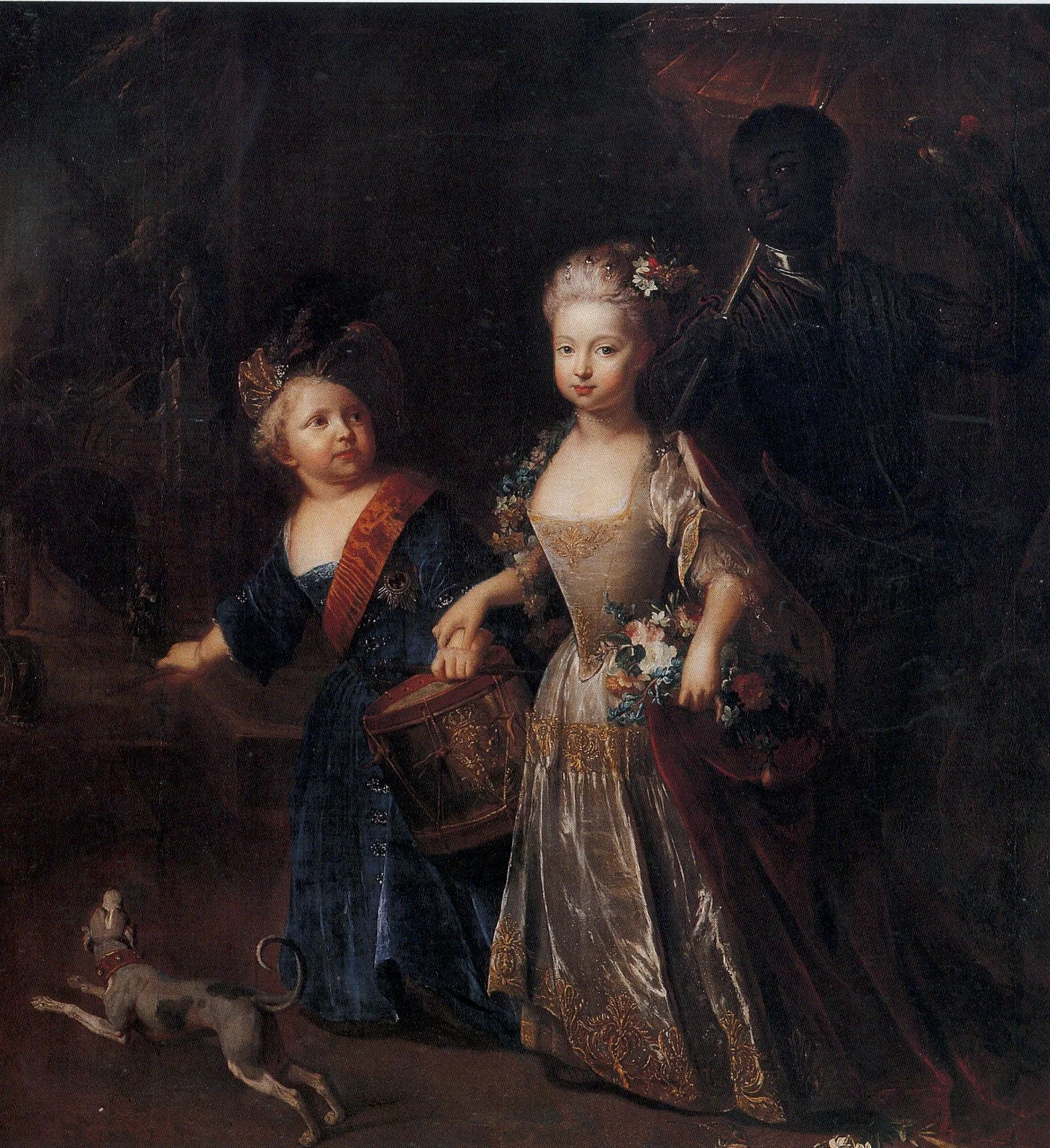
Antoine Pesne: Frederick the Great as a child with his sister Wilhelmine. Oil on canvas 1715.
Sonata in A minor - Wilhelmine von Bayreuth
The Sonata for flute and continuo in A minor was written either just before or after Wilhelmine’s marriage in 1731. This means it could have been written for either her brother or her new husband: both played the flute and had lessons from the premier flautist of the era, Johann Joachim Quantz (1697-1771). This influence gives us a good idea of the kind of flute and style of playing that was envisaged by Wilhelmine as she composed, thanks to both the famous 1752 Versuch written by Quantz and the surviving flutes that once belonged to Frederick.
Quantz flutes again...
While early musicians quote Quantz so frequently that a book has actually been written titled “Quantz Says...”, actual direct copies of Quantz’s flutes are very seldom heard. I believe this is because they reflect a different style of playing to the later 18th century flutes that players used from the dawn of the early-music revolution until today, and which play around A=415 Hz (about a semitone below the modern standard 440 Hz). Luckily, I have spent the past 5 years working on playing the original Quantz flute design as made by Jean-François Beaudin of Quebec, Canada. Like other players in Europe and elsewhere who are working with this flute, I believe that the design is meticulously created to match specific tastes and we need to be flexible and determined in altering our own playing to make sense of the design. In the past I have seen flute makers describe the “quirks of Quantz’s design”, which they invariably “improve”, but in doing so we lose the chance to truly explore what these instruments can tell us.

Adolph Menzel: Frederick the Great Playing the Flute at Sanssouci. Oil on canvas, 1852. (Frederick plays the flute, Quantz is standing far right, and Wilhelmine sits on the pink couch).
What do they tell, or how do they sing?
Wilhelmine’s sonata is in A minor, a key that was considered tender, plaintive, and sad at the time. You will hear the Quantz flute playing at A=392 Hz (a whole tone below 440 Hx). To play at 392 I must use a shorter middle piece because Quantz’s instrument is designed to play even lower than this! His ideal tone was that of a contralto singer and here the thick dark wood and unique blowing technique give the opening theme a haunting, mellow voice. I have worked to ornament this movement in a cantabile style, perhaps as the older siblings would have elaborated on the playing of their 20-something year old selves (my flute is also modelled after some of Frederick’s later instruments). The following Presto is forceful and direct, possibly reflecting Wilhelmine’s taste for “wild thundering flute playing” as reported by a friend. The sonata concludes with a light Allegro with a dance-like theme. This is a typically elegant way to conclude a modern (for 1730) 3 movement sonata and is seen frequently in music of CPE Bach, Kirnberger and Quantz.
The Light and Joy of performing early music
Exploring all of these aspects is not an easy path, especially as we all balance it with 21st century lives. However it is immensely fulfilling and indeed joyful for us to share our work and our passion with you, and I hope you will enjoy this programme.
Click the button below to book tickets to HIP Company’s “Light of Joy”, on 14th and 15th March, 2026.
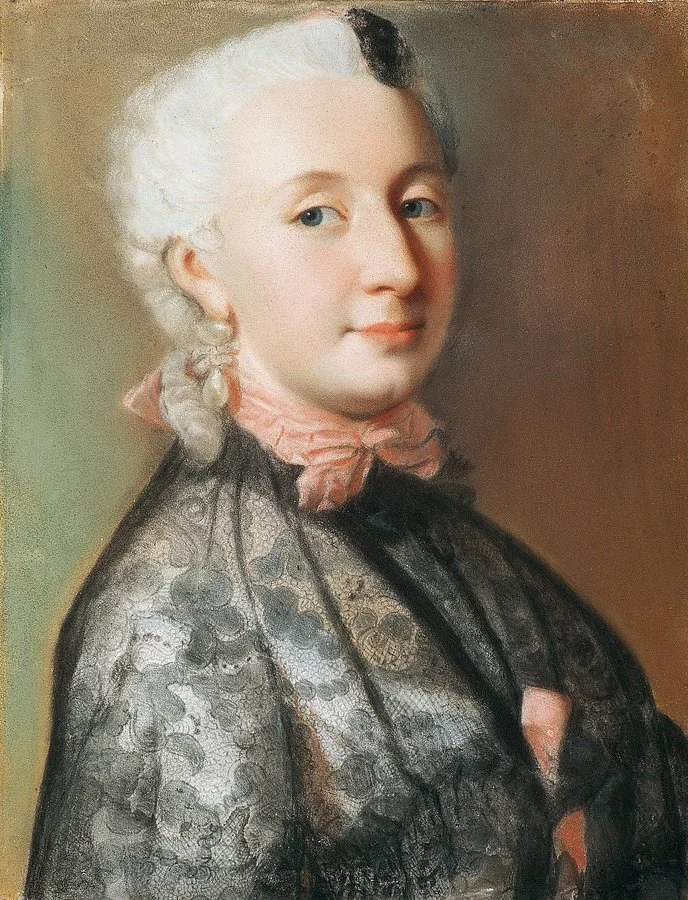
Jean-Étienne Liotard: Wilhelmine of Prussia, Margravine of Brandenburg-Bayreuth. Oil on canvas, ca. 1745.