

A 1686 Barak Norman Viol Restoration and its Copy
Written by Andrew Tait, Perth-based luthier, double bass and violone player. Andrew’s next HIP Company performance is in Consort on 10th October.
14th September 2026.
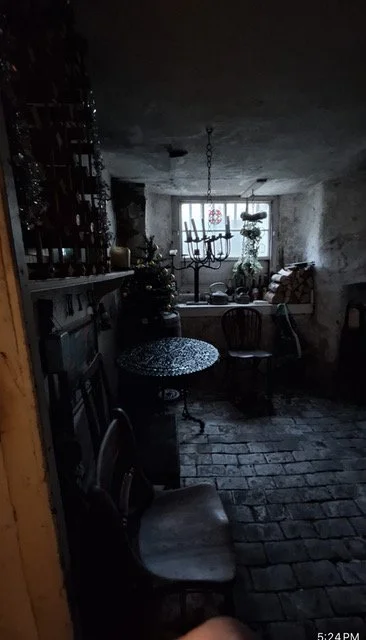
It is every string player’s dream to one day own or play an original Stradivarius instrument. In the world of viols, that dream would be to find or play an original instrument by Barak Norman. So in September 2023, when a London colleague contacted me and mentioned that an acquaintance of his was selling the Georgian home that had been in her family for four generations, and in the basement of this home was an old cello (in pieces) that they wished to sell, I became very curious.
My colleague sent through some photos and suggested that, if I was interested, I should make an offer and hop on the next flight to London! The instrument was in very poor condition, but I recognised the floral purfling designs on the front and back as being the work of Barak Norman straight away. I had made a copy of a 1697 Barak Norman bass viol with strikingly similar dimensions and designs. A large number of bass viols have survived purely because they were converted to cellos after the viol fell from fashion in the mid-18th century, and so it was for this instrument.
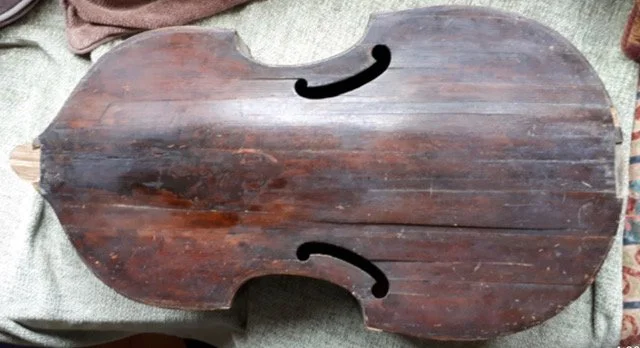
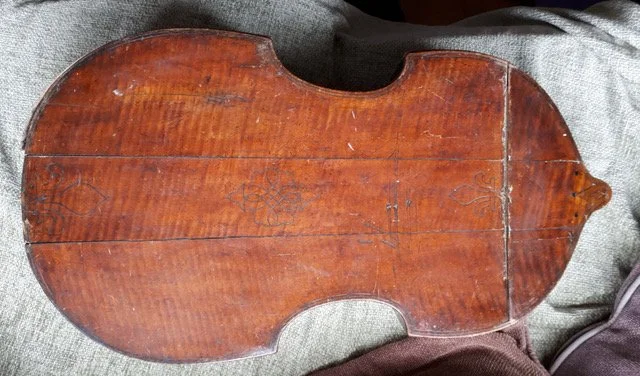
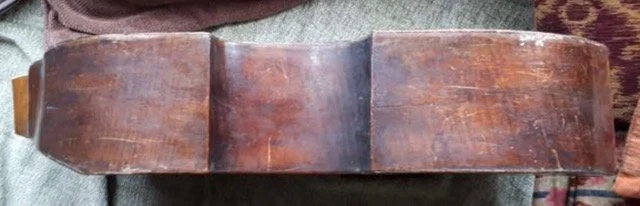
Needless to say, I made an acceptable offer, and began arrangements to fly to London. I was quite nervous at this stage, as one can never be sure when purchasing an old instrument from photos that the condition of the instrument will be sufficient to enable restoration. I arranged for the Viol to be delivered to Ben Hebbert in Oxford until I could pick it up. Ben is an expert on the instruments of Barak Norman and was pleased to get the opportunity to study it.
Barak Norman (1651-1724) was a contemporary of Antonio Stradivarius (1644-1737) and established himself as the leading viol maker of his time. He was orphaned early in life, having lost both his parents to the plague, and at the age of 17 he was apprenticed to W. Harding (from 1668 till 1675). Norman established his business in St Paul's Churchyard, London, from 1692 under the sign, “The Bass Viol”.
On inspection of the label (with the aid of a UV camera), we discovered that this instrument is the earliest surviving signed Barak Norman instrument. As Ben owned the last surviving Barak Norman instrument we couldn’t resist a selfie with the First and Last!
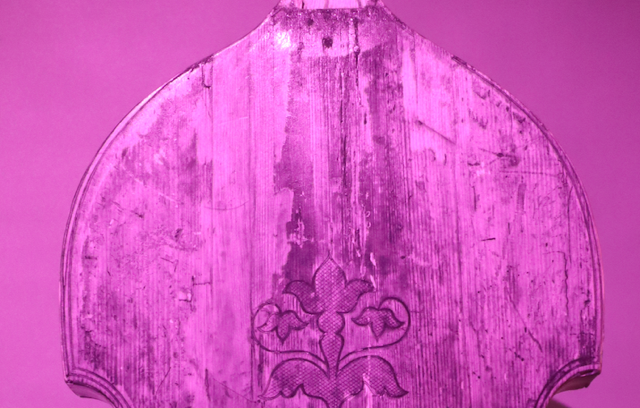
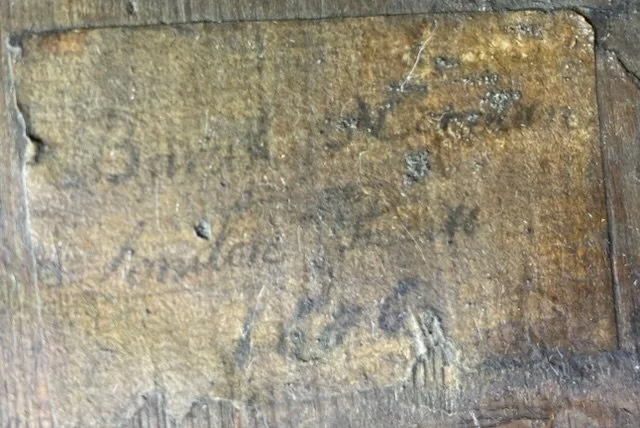
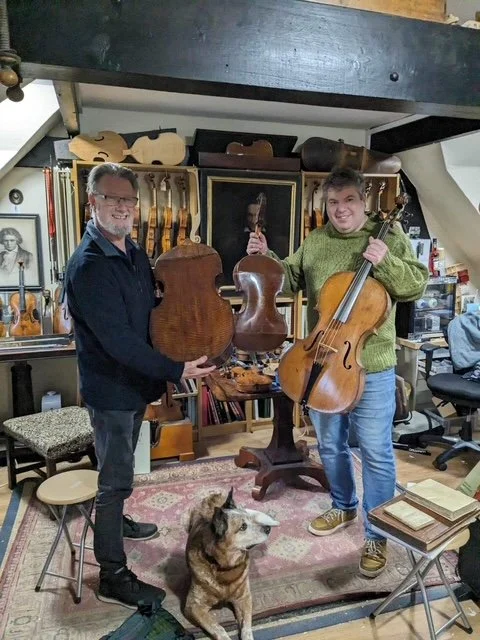
There was much discussion on the process of the restoration of my instrument, and before heading back home, I also visited another viol expert, Shem Mackey in Ramsgate, to get his opinion. It was decided that the best model to follow in the restoration of my Barak Norman viol was the 1692 Barak Norman which was housed at the Royal College of Music Museum In London. This instrument was the closest in years and dimensions to my 1686 viol.
I made an appointment with the museum and got to study the 1692 instrument, with white gloves of course! With an acute appreciation of the historical and cultural significance of the instrument that was now under my care, I headed home with my prized piece of history. Being built in 1686, it came into the world when J.S. Bach was one year old! I often wonder who had the pleasure of listening to or playing this instrument… King James II? Did it play in Henry Purcell's orchestra?
Having studied and worked in the atelier of Roger Dawson in London over a 20-year period, I had received a thorough training on the traditions and lineage of the English luthier school, which I felt had adequately equipped me for the daunting task of embarking on what was to be an intense journey of restoring this instrument to its original form of a bass viol.
A thorough assessment of the present condition of the viol revealed that it had undergone at least two major restorations in its 340-year lifespan with a conversion to either a piccolo cello or a small child-sized instrument in the 18th century. The neck had been broken a number of times and pinned to the upper block with ebony pins. Similar-sized ebony pins had been used to secure the back to the upper block when the original viol neck had been replaced with a cello neck.
The cello neck and scroll showed few signs of use, as the original pegs had little wear and the peg box had not been rebushed. Having closely studied seven surviving Barak Norman bass viols, I formed a clear idea of exactly which parts of my viol were original and which had been replaced. I was able to make informed decisions when it came to either retaining or replacing internal parts, and was guided by the advice of some of the world’s leading experts.
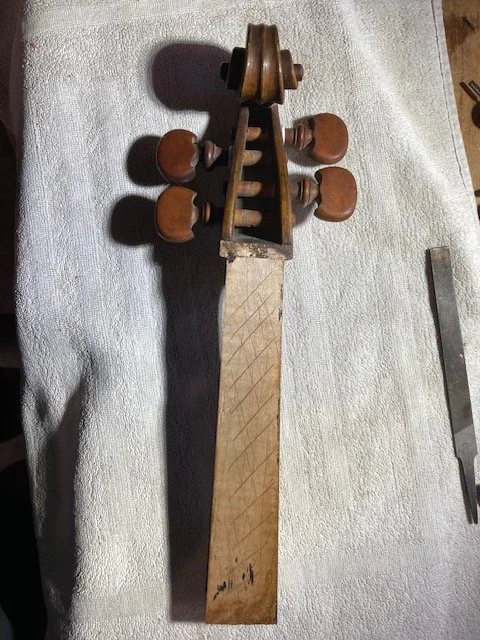
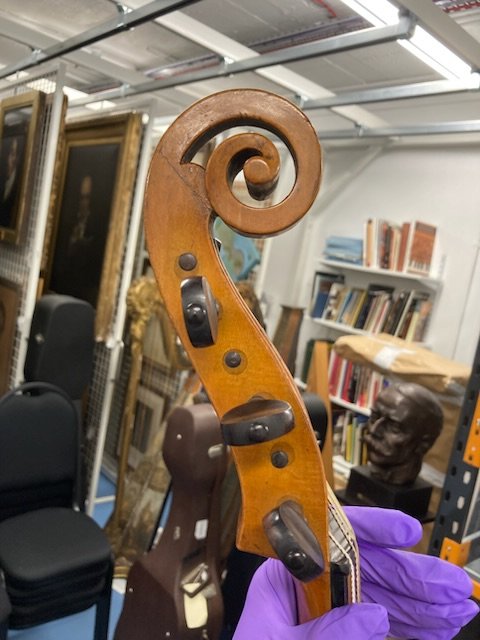
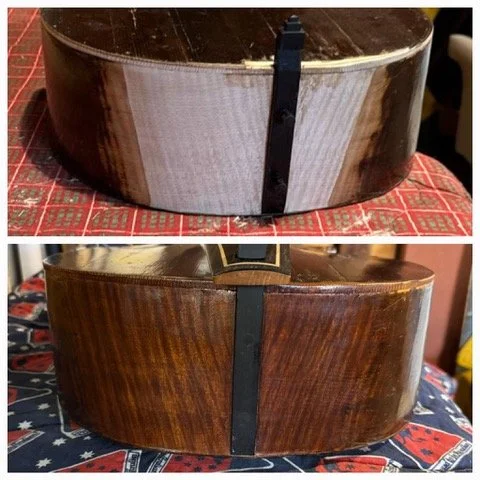
The final phase of this three-year restoration involved attending an Iris Carr course on matching new wood to old and retouching varnish. Her course was run by the British Violin Making Association, and held at the Westhope College in Shropshire. The participants were 7 luthiers from 7 different countries, and the experience was a remarkable week of learning in a collegial atmosphere in a quiet country setting.
When an old friend and fellow founding member of the Perth Viol Consort, Makoto Harris Takao, heard about my acquisition, he commissioned a copy of the 1686 Barak Norman. This gave me the opportunity to make a copy that would be even closer to the original, as there were some small modifications made to the original when it was converted to a cello set-up which were not feasible to reverse. These are just visible when you see the Makoto copy side by side with the original, such as a slight increase in upper block width - the original had the outer line of double purfling filed away.
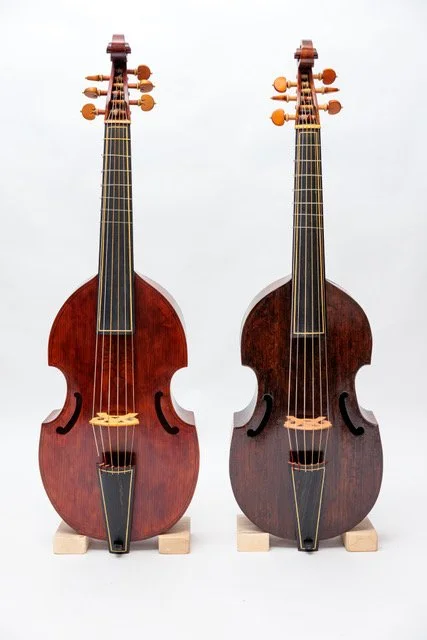
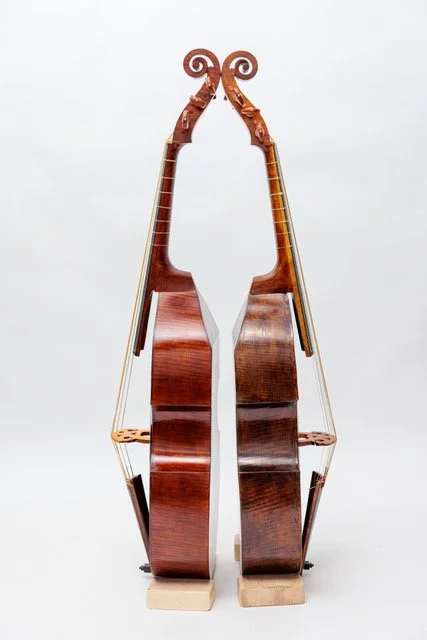
1686 Barak Norman with Copy. Photos by Nik Babic.
I have been waiting for an appropriate opportunity to debut the Barak Norman 1686 Bass Viol to the general public after its significant restoration, and have found both a wonderful exponent in Krista Low (gamba player extraordinaire) and a marvellous company in HIP Company for the instrument to find its voice, after what is most likely a 200 year “rest period”!
The story of this particular instrument has just begun, as the history of its provenance is showing some exciting potential links to Prince Albert (Queen Victoria’s Consort)… That story is yet to be fully researched, and will require a trip to London.
Join HIP Company in Consort in Fremantle WA on 10th October 2026, to hear Andrew and these instruments live!
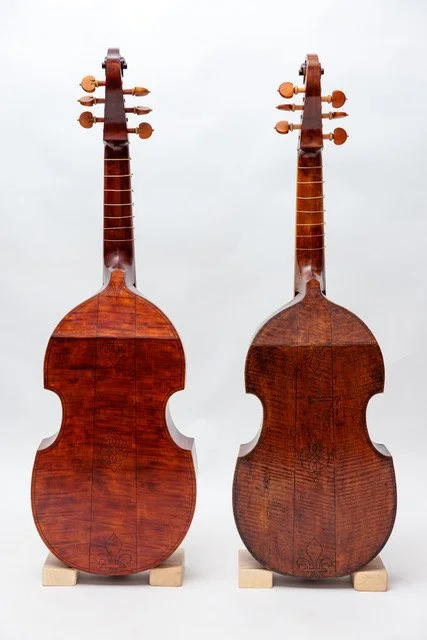
1686 Barak Norman with Copy. Photos by Nik Babic.